Art in the Square Kentuck Days Information
Crandon Chamber of Commerce
Home |  Events Calendar |  Things to See & Do |  Trails |  Fishing |  Become a Member |  Contact Us


Forest County Communities
 

Kentuckians who came to homestead first populated the town of Argonne, along the Pine River with the Native Americans. Argonne was first named VanZile, after Abraham VanZile who plotted all the land in the area. The Soo Line railroad came in 1887, and a depot was built. There was one large hotel and a school located just north on Highway 32, housing eight students. In 1894, the first two-story school was built and it served the community until 1991. The town, later called North Crandon, was originally located over a mile east of its present location, relocated because it was impossible for trains to start up with a load of lumber due to the steep grade.

As more people came north to work in the lumber camps, the town grew until it contained two large hotels, two large grocery stores, one clothing store, a meat market, a post office, a printing shop, two newspapers (Forest Leaves and Northern Citizen), a large livery stable, a bank, seven saloons, two doctors, and several other small businesses. The Farmers and Merchants State Bank was said to be the first bank in the State of Wisconsin.

When the town of Crandon was planned a limit of two saloons was imposed on North Crandon. That effort was unsuccessful. Men from the Hiles logging camps came to frequent the saloons and if they drank more than their paychecks, owners would send the bills to Mr. Hiles and their tab would be taken out of their next paychecks. This kept many of the loggers broke.

A stagecoach carried the mail and passengers between Crandon and North Crandon, taking three to four hours to drive over the rough corduroy roads. When a proposal came up to locate the Forest County Courthouse in downtown Argonne, a well-educated resident found a way for the Three Lakes Township to break away and become attached to Oneida County. This eliminated quite a number of people who would have voted for the Argonne location. He also put ads in papers recruiting people to come to live in North Crandon. This brought one person with small pox, resulting in 85% of the population contracting the disease.

Confusion with the mail and the name "North Crandon" prompted the community to come up with a new name. "Champion", the name of a local merchant, was considered for a short while. In 1921 the name "Argonne" was chosen following the patriotic fervor after World War I for the Battle of Argonne in eastern France.

Today, the railroad tracks still exist along with a small post office and a handful of businesses. Argonne invites past and present residents to their annual "Argonne Days" celebration, held in August, to commemorate their history. [top of page]

The Town of Armstrong Creek is located on the far northeastern corner of Forest County. It is bordered by two other counties; Florence to the north and Marinette to the east. It was legally named and put into the Forest County books in November of 1922 but the town was in existence long before under such names as Caswell, LaFollette, Bonneville, and Engleking.

In the early 1900's, Grimmer Land Company published ads in the Chicago and Pittsburgh area newspapers, targeting the Polish immigrants with Polish advertisements promising that Armstrong Creek was the "Land of Milk and Honey". Armstrong Creek soon became a town of residents with deep Polish roots. In 1919, Polish residents formed a local branch of the "Polish National Alliance", a national group that is still in existence today. It is from this early history that Armstrong Creek's annual Polish Heritage Days was formed.

The first weekend in August has been set aside to pay tribute to the towns colorful past. The weekend starts out with a street dance and crowning of "Miss Armstrong Creek" on Friday. On Saturday there is an authentic outdoor Polish mass at St. Stanislaus Kostka Catholic Church beginning at 12:30 p.m. followed by a parade at 1:30 p.m. Visitors will enjoy experiencing the Polish culture and seeing the elaborately decorated costumes. The parade culminates at the town park, where spectators enjoy a full day of Polish foods, displays, crafts, Polka music, dancing, and other entertainment. The highlight of the day is a music and dance demonstration by the Polish Highlanders of America, from Chicago, IL.

Polish Heritage Days was founded in 1991 and is sponsored by Citizens for Armstrong Creek, Inc. For more information contact: Pres. Kara Millan, 8896 Millan Rd., Armstrong Creek, WI 54103 or call 715-336-2973.

When visiting Armstrong Creek, one might venture south on old Highway 101 to see the "Red Bridge". This piece of Armstrong Creek history was built in the late 1800's. Made of steel, the bridge is said to be part of the Military Road that traveled through Forest County, linking Fort Howard in Green Bay to Fort Wilkens in Upper Michigan's Keweenaw Point. In 1992, Forest County's WCC crew refurbished the bridge, attaching picnic tables to it, so that visitors can enjoy a picnic while watching the beautiful Armstrong Creek rumble under them. [top of page]

The town of Blackwell once had 800-1000 residents, many who worked for the Flanner family in the hardwood mill. The Flanner home, one of the finest in northern Wisconsin, had a walnut paneled living and dining room, birdseye flooring, and several fieldstone fireplaces. Bankruptcy became a reality for the Flanner Family during the Great Depression. This home is still standing to this day, in fact, and is used as a nursing home.

Blackwell is also home to the Blackwell Civilian Conservation Job Corps Center, operating as a job training center for your ages 16-21. It provides them with meaningful work experience, job training, and gives them the opportunity for community service. The USDA Forest Service employs over 90 people at the center. [top of page]

The center of the once thriving community of Cavour is about 1/2-mile off Highway 8 on County Highway G, and thus few present-day travelers have a chance to go through Cavour. It is well worth the effort, if only to envision what went on there at the turn-of-the-century. Cavour used to be quite a bustling place with a lumberjack population of nearly 600.

The Soo Line Railroad came through in 1887 at the start of the logging era. Cavour boasted a general store, a sawmill, a hotel and a bar - all owned by the Hess family. Frank and Mary Hess were the founders of the legacy. The fact that the town was built in a different era is evident in that it exists on the railroad tracks rather than on the major highway.

The Hess Hotel had a legacy all it's own. It was a place where many logging men came to stay and wile away his woes in pleasant surroundings. Cavour was a major stop on the Soo Line Railroad and many travelers got laid off and stayed in Cavour. In 1911 the original hotel burned down but was rebuilt immediately. Frank Hess died and Mary ran the hotel by herself from 1919 on until she died in the 1950's. The hotel business dwindled after the boom of logging died down. The Hess House and school still stand for anyone who wants to visit this historical place. [top of page]

Crandon was the dream of Samuel Shaw, an entrepreneur and capitalist who acquired property in the area in the 1880s. His vision was to build the city between the two hills and around the four lakes that are within the City limits. The area was part of Oconto County at that time, and Shaw, with assistance from Major Frank P. Crandon (tax commissioner with the Chicago and Northwestern Railroad), successfully lobbied the legislature for the creation of a new county. Forest County was created in 1887 and Crandon was named the county seat. Crandon didn't expand as fast as other communities in the county due to lack of rail service. Freight and passengers traveled to Crandon by riding the train to either Pelican Lake or Argonne, then walking or riding the stagecoach.

In 1891, Page and Landeck Lumber Company bought a huge tract of hardwood timberlands near Crandon, but they were unable to utilize the resource until the CN&W railroad built a spur from Pelican Lake. By 1902, the company built a huge sawmill (later named the Keith & Hiles Lumber Mill) near Clear Lake on Crandon's north side. The population of Crandon grew from 800 to over 2,400 in just a few years. The migration of settlers and loggers who came to Crandon in the first part of the century was due, in part, to the cheap cutover land available for farming and, in part, to the fact that the Page & Landeck sawmill was moved to Crandon from Glasgow, Kentucky. Many employees followed the mill from Kentucky to its new home. The so-called Crandon "Kentuck" is known about statewide and is the source of much rich cultural history in Crandon.

Crandon was incorporated into a City right after the new courthouse construction began, and times were booming with many of the attractive brick buildings in town built during that time frame. The outlook was good for Crandon until the timber industry began to play out. Crandon still boasts a good many logging companies that work in the Nicolet National Forest, has a healthy tourist industry, and is currently enjoying a growth in light industry.

Crandon Public Library. Located at 110 W. Polk Street; Open Monday -Friday, 9:00 a.m. - 5:00 p.m., Saturday 9:00 a.m. - 3:00 p.m. (715) 478-3784 [top of page]

Although small in population, the Hiles area is very large in terms of Wisconsin history. Hundreds of years ago the Old Copper Culture Indians traveled through this area from the Fox River Valley, along the Wolf and Pine Lake shores. They continued on north to the copper outcroppings near Lake Superior. When the Soo Locks opened in 1855, this trail was followed from Ontonagon on Lake Superior to Pine Lake and then along the Wolf to Shawano and on to Fort Howard (Green Bay). By the late 1860's, loggers used the lake and river to float logs downstream to the sawmills located as far away as Oshkosh. The decade of the 1880's brought railroads to northeastern Wisconsin. In 1888, the Soo graded and laid their Minneapolis-to-Soo tracks along the south end of the lake. In 1892, Pete Johnson built the first official resort.

Ten years later, in 1902, the town got its real start when 52-year-old Franklin Pierce Hiles, purchased thousands of acres of timberland in the Pine Lake area and started a sawmill near the Mill Pond. In 1903, the new village was named "Hiles". The Hiles' operation continued until 1905 when it was sold to Forster-Whitman and later reorganized as the Forster-Mueller Lumber Company.

In 1918, Charles Fish purchased the town and its lumber and logging operations until it closed down in 1928. During this era of logging many improvements were made to Hiles, including a general store, a large boarding house, schools, churches, and some 30 or more homes. Hiles had it's own logging railroad running into the forest, east and north of town. At some points in time, the census records indicate that there were as many as 450 residents in this small town.

In the depression years of the 1930's, 10,000 unemployed transients walked the roads. The state of Wisconsin was helping by maintaining eight transient posts in various parts of the state. One such depot, accommodating 300 to 600 men, was established in Hiles. Throughout the years there have been small lumber and logging operations active in Hiles.

Today Hiles is a good mixture of forestry, logging, hunting, fishing, boating, cross country skiing, and snowmobiling, Today's residences are an equal balance of homes with families (many having deep family roots here) and many vacationers that are both seasonal and retire to Hiles. In 2003, Hiles celebrated 100 years in the Northwoods with a spectacular celebration and a 200 page history book, which is still available for purchase. The residents of Hiles have also formed a group of volunteers to organize a hometown museum that holds interesting facts, documents, and items from the past. [top of page]

The 1,400 people who live in the Laona area are heirs to the shared heritage of the timber industry. The turn of the century marked the founding of Laona, just 20 years prior to logging's heyday. Around 1876, the pine loggers came into the area and cleared off the pine stands, which were scattered throughout the hardwoods. Not until the railroad came to Laona in 1900, however, did the great hardwood logging operations begin. Exploratory expeditions into this area by pine loggers and a few other individuals took place between 1870 and 1890. The area was not very accessible and few men ventured this far from the last outposts. Eventually, logging expeditions moved into the area, with pine being hauled on sleighs to Roberts Lake and floated down the Wolf River or put in the Peshtigo River, below Taylor Falls.

During the last decade of the 19th century, William Duncan Connor hiked through the area and examined the fine stands of hardwood timber. He purchased 100,000 acres of timberland in Forest County, founding the Connor Lumber and Land Company. During this period the Chicago Northwestern Railroad was moving northward into the Laona area. The initial logging of the area occurred between 1900 and 1910.

The first settler in Laona was Norman Johnson. His daughter, Laona, was the first white child born in this town, and the town was named in her honor. The Connor Lumber and Land Company built its first sawmill in 1901, logging camps were opened and roads were built. Laona began to thrive as railroads steamed their way into northern Wisconsin, and Laona's economy became largely dependent upon the timber industry. A member of the Connor family still operates a sawmill in the community to this day. An authentic 1916 Vulcan steam engine, actually used by the Connor Lumber and Land Company during early logging operations, is now used to pull the vintage passenger train at the award winning, internationally recognized Camp Five Lumberjack Special & Museum attraction.

Laona Edith Evans Community Library. Located at 5216 Forest Street; Open Monday, Wednesday, Thursday, and Friday, 8:00 a.m. - 3:00 p.m.; Tuesday from 8:00 a.m. - 5:00 p.m. (715)674-4751 [top of page]

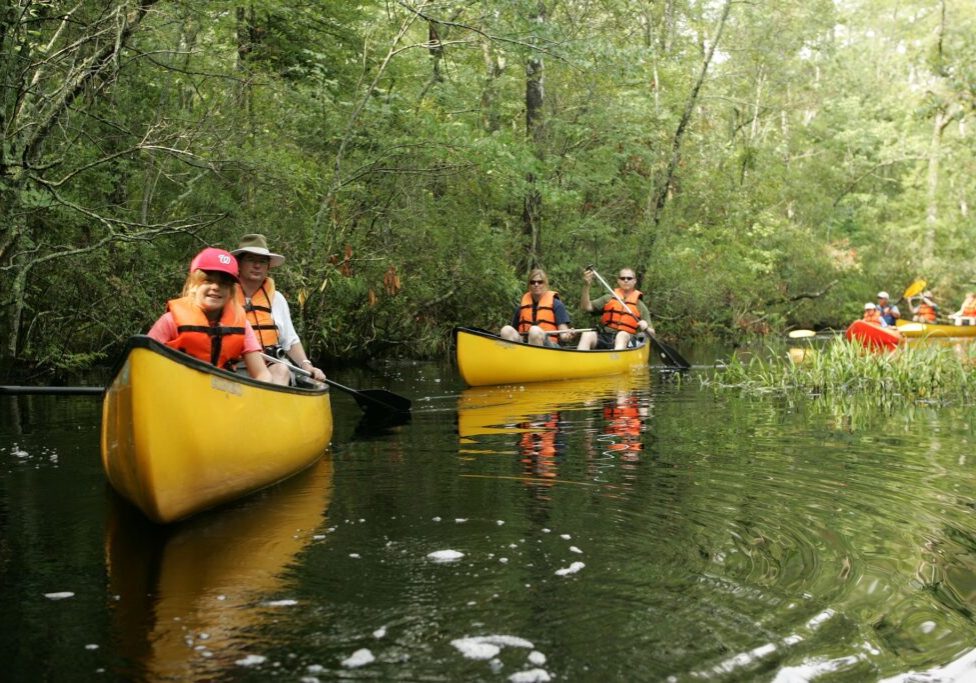
The Pickerel area is a premier vacation destination. Located in the southwest corner of Forest County, it offers year around vacation opportunities. The Pickerel and Crane Lakes are the crown jewels of the area. Pickerel Lake is a shallow lake offering canoeing, paddle and pontoon boating and, of course, fishing. One may just want to relax and enjoy the natural beauty of the area. Besides Pickerel and Crane, other lakes in the area include Rollingstone, Lily, Big Twin, and Post Lakes, all offering the same great recreational opportunities.

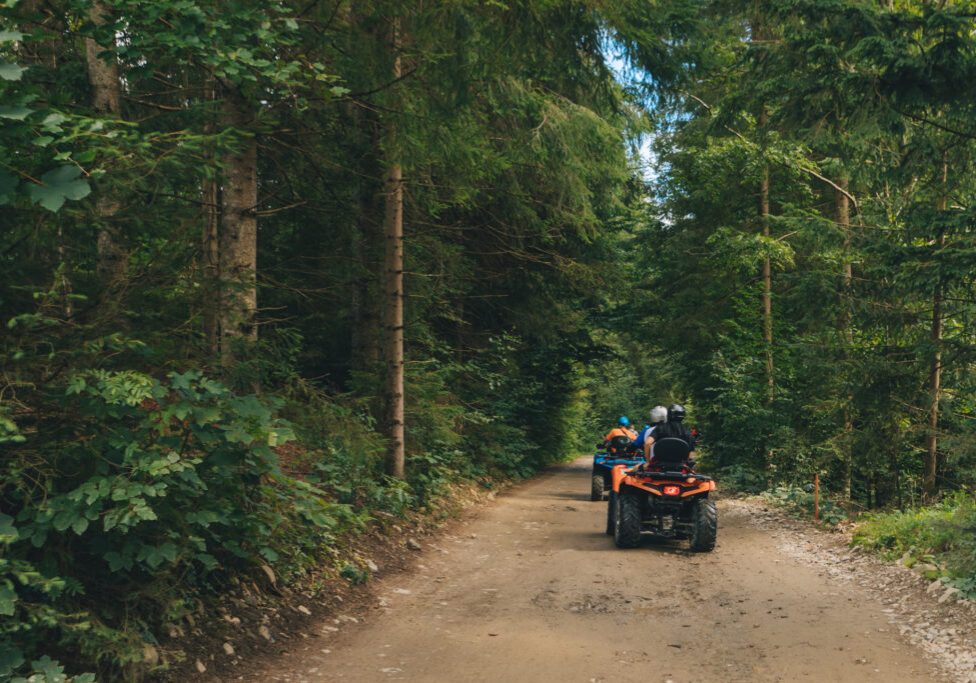
The region has many fine restaurants, resorts, bars, campgrounds, and gas facilities. There is an excellent golf course in the area. This region is home to one of the largest snowmobile clubs in Wisconsin, the Tombstone-Pickerel Snow Club (www.tombstonepickerel.com). It is also home to the newly established Pickerel-Pearson Wolf River Riders ATV Club (www.wolfriverriders.com).

For bikers and walkers, a new bike-pedestrian trail has been built, running along Pickerel Lake Road from the bridge, between Pickerel and Crane lakes west to Bartz Bay Road. Today, sportsmen and nature lovers of all ages enjoy the unspoiled beauty of the area. The serenity of the forests and the casual lifestyle are welcome changes from the daily rat race. [top of page]
 

On June 2, 1880, a tornado swept across northern Wisconsin from Antigo to Lake Superior, causing timber to blow down in a strip that measured 1/2 to 1 mile wide. The Native Americans called this area "Waubeno". Waubeno means "the coming of the winds" or "the opening." The town took its name from this event.

The early history of Wabeno centers around the development of three lumber companies, which were the Menominee Bay Shore Lumber Company, A.E. Rusch Lumber Company, and the Jones Lumber Company. In the closing years of the 1800's the Chicago and Northwestern Railroad pushed north into the area, which had already been explored by the pine lumbering interests. Sawmills were soon built along the tracks, and a town sprang up around them. In 1905, there were five sawmills - the Bay Shore, Rusch, Jones, Prebe and the Mayflower. Wood fueled the community's economy. Together the three lumber companies produced more than 35 million feet of lumber a year in their heyday. All but the Menominee Bay Shore mill shut down between 1920 and 1930. In 1936, it too, was forced to close its doors after pursuing an aggressive logging operation. Company officials hoped to sell these cutover and burned lands to prospective farmers. Farming is still prevalent in the region but never to the extent envisioned due to the short northern growing season.

Wabeno boasts a Logging Museum containing relics and records preserved in a replica of an old logging camp, presenting a nostalgic picture of the most colorful era in Forest County history. The Wabeno Lions Club built the Logging Museum in 1941. The museum is housed in a genuine notched log structure. The building was created to replicate a logging camp. There are many items of interest in this museum, containing almost everything needed for hardwood logging. The only thing missing is the complete harness for the horses.

The Wabeno Public Library is one of the most quaint and charming log libraries in the state of Wisconsin. As a working library, librarians are on hand to help locate reading material for pleasure or research. The building was purchased in 1923 from the Chicago and Northwestern Railroad Company. It was built in 1897 and served as the land office for the railroad company, making it one of the first buildings in Wabeno.

The Wabeno Antique Power Association holds its annual celebration of historical technology the 3rd weekend in July. Anyone interested in antique machinery would find something of interest at "Steam Up Days". Everything from steam-powered engines to old gasoline engines of the past are displayed at the festival. Visitors can watch a Case steam engine sawing lumber and many other attractions from bean shucking to quilting. They will also see the Phoenix Log Hauler in action, one of the few remaining steam-powered log haulers in the nation still operational. This steam hauler was one the 200 such machines built in the early 1900's by the Phoenix Manufacturing Company, property of the Jones Lumber Company for use at their mill in Wabeno from 1909 until 1935, and was purchased by the town in 1944. The hauler was brought back to life and demonstrated at the first logging show in Wabeno in 1965.

Wabeno Public Library. Located on Highway 32; Open Monday - Friday, 12:00 - 4:30 p.m., Saturday 9:00 a.m. - 3:00 p.m. (715) 473-4131

Wabeno Logging Museum. Located on Highway 32; Open seasonally Friday and Saturday, 10:00 a.m. to 5:00 p.m., Sundays 10:00 a.m. - 4:00 p.m. [top of page]


MEMBER SEARCH
(search name or description)
Trail Conditions

Trail Conditions


All Events
09-10-2010
Flea Market, Fridays, downtown Wabeno

------------------------------
09-10-2010 ... 09-12-2010
Forest County Fair, Crandon

------------------------------
09-10-2010
Mole Masters 2010 Golf Fun Day

------------------------------
09-11-2010
Polish Fest, Sunset Bay, Pickerel

------------------------------
09-17-2010
Flea Market, Fridays, downtown Wabeno

------------------------------
09-18-2010
Art in the Square, Courthouse Square, Crandon

------------------------------
09-18-2010
Camp Five Lumberjack Special Fall Festival, Laona

------------------------------
09-18-2010
Art in the Square

------------------------------
09-18-2010
International Talk Like a Pirate Day, Johnnies Resort, Laona

------------------------------
09-24-2010
Flea Market, Fridays, downtown Wabeno

------------------------------
09-24-2010 ... 09-26-2010
Big Woods Dual 200 Sport/Motorcycle Cross Event, Fairgrounds, Wabeno

------------------------------
09-25-2010
Camp Five Lumberjack Special Fall Festival, Laona

------------------------------
09-25-2010
Wabeno American Legion Fall Colorama Dinner & Raffle, Wabeno

------------------------------
10-02-2010
Camp Five Lumberjack Special Fall Festival & Cowboy Re-enactment, Laona

------------------------------
10-06-2010
Mole Lake Market Days

------------------------------
10-13-2010
Mole Lake Market Days

------------------------------
10-20-2010
Mole Lake Market Days

------------------------------
10-27-2010
Mole Lake Market Days

------------------------------
10-30-2010 ... 10-31-2010
Dirty Dog Dryland Derby (wheeled sled dog races), Pickerel

------------------------------
10-31-2010
ABC Halloween Partie, St. Mary's

------------------------------
10-31-2010
Halloween Trick-or-Treating, Crandon

------------------------------
11-03-2010
Mole Lake Market Days

------------------------------
11-06-2010
Northern Buckhunters Annual Banquet, Crandon Community Bldg.

------------------------------
All Events